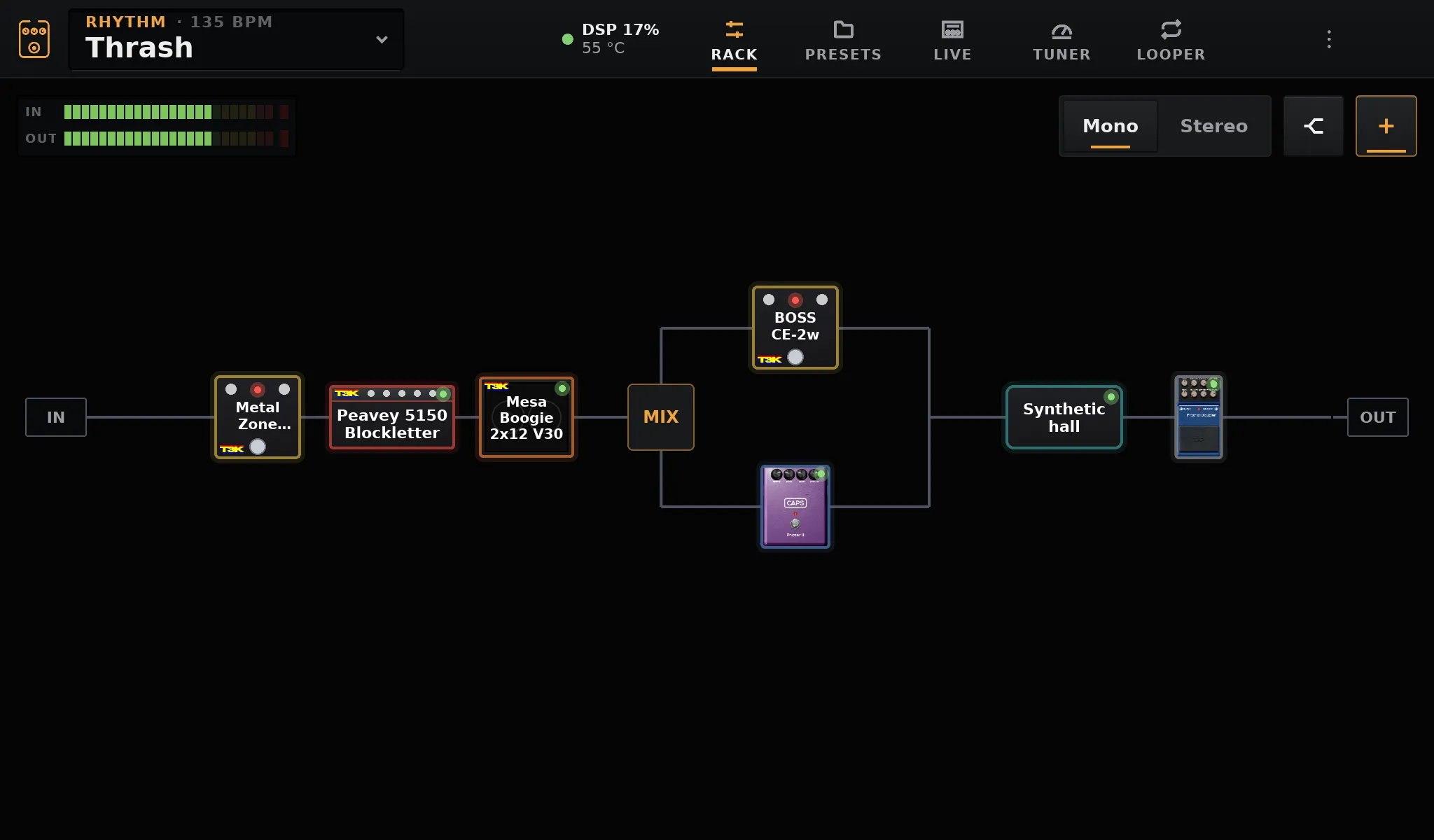
OpenRig is a guitar multi-effects pedalboard that you assemble from standard parts: a
Raspberry Pi 5 (or an x86_64 mini PC with an AVX2 CPU), a USB audio interface and a touchscreen. It ships as a
small operating system that boots straight into the pedalboard: no desktop, no login, no
computer needed once the card is written.
Amps, pedals and cabinets from Neural Amp Modeler
captures and impulse responses, as built-in blocks.
Multi-core DSP: a heavy rig is spread over all four Cortex-A76 cores of the Pi 5, split
branches and pipeline stages each on their core, with no added latency and the same sound.
LV2 effects: LV2 plugins built for the board (ZAM, x42, Calf, LSP, CAPS…), and a store to
install more from the screen.
TONE3000: browse and download captures from tone3000.com
on the pedalboard itself.
Live: presets with 8 scenes each, setlists, a stomp mode, tap tempo, a tuner and a
looper, played from the screen, footswitches or MIDI.
Rigs: a preset, its models and plugins packed in one file, shared and installed in one
tap through openrig.eu.
An appliance: a read-only system with a real-time kernel and signed updates that roll
back if something goes wrong. Audio interface, buffer and screen rotation are set from the
screen, and a plugin that crashes is caught while the dry signal plays on.